

Fiberglass Pool Restoration
Specialized restoration for cracked, blistered, faded and structurally damaged fiberglass pool shells—often saving pools that other contractors recommend replacing.
Understanding fiberglass pool restoration
A fiberglass pool is a one-piece molded shell protected by a colored gel coat. The gel coat is the visible, tactile layer you see; underneath it is the structural fiberglass laminate that gives the shell its strength.
Florida UV exposure, ground movement, age and water chemistry slowly wear the gel coat. The result can be spider cracks, osmosis blisters, chalky fading, soft spots on steps, and in some cases cracks or flex in the laminate itself.
Restoration is the process of grinding out damaged material, rebuilding compromised laminate with resin and fiberglass matting where needed, applying color-matched gel coat, then sanding and polishing so the shell looks and performs like new again.
The same fiberglass shell, transformed
These are photos from one of our own fiberglass restorations: a badly stained, failing surface, the same shell after prep and a fresh gel-coat system, and the finished pool back in service. A worn or stained fiberglass surface does not mean the pool has to be replaced.
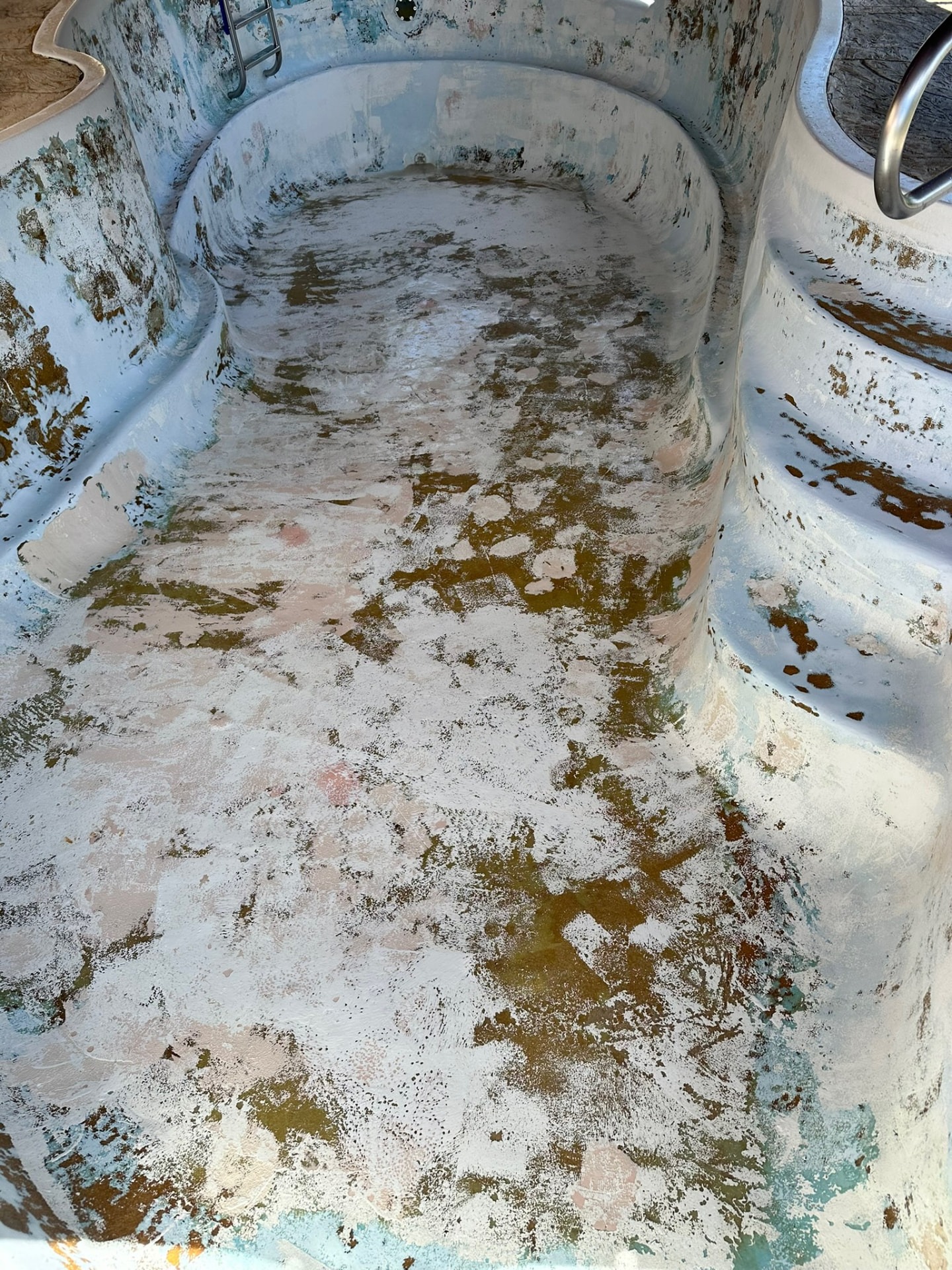
Before — failing, stained surface
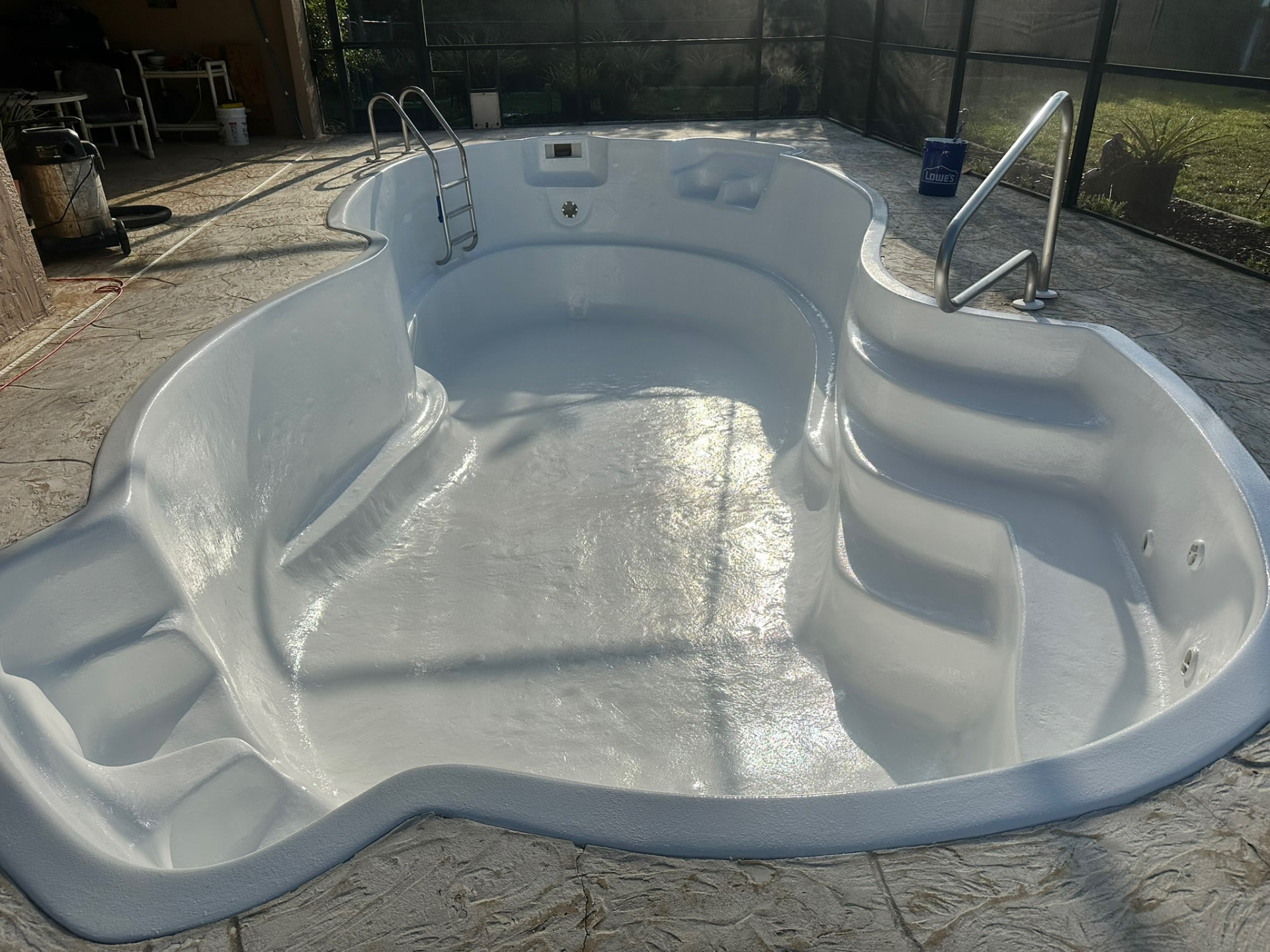
During — prepped and refinished shell
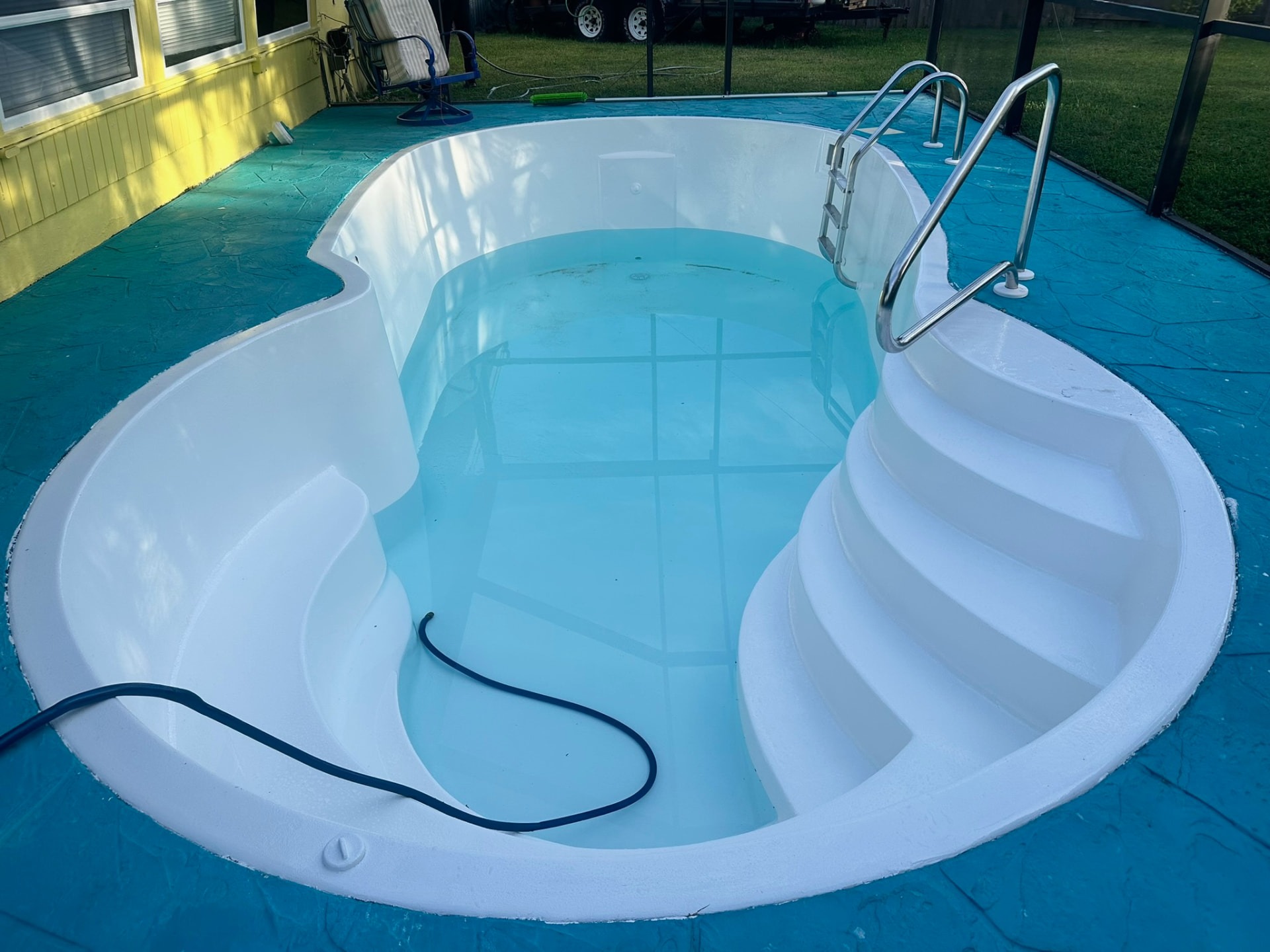
After — restored and back in service
What restoration involves
We inspect the shell, grind out damaged gel coat, rebuild any weakened laminate, apply color-matched gel coat, then sand and polish until the repair blends in with the rest of the pool.
Specialized training
Our technicians are trained in fiberglass repair, resin layup and gel-coat refinishing systems so the work is done to manufacturer-level standards—not patched with off-the-shelf filler.
Replacement is rarely required
Spider cracks, blisters, fading and even many structural problems can be repaired. We evaluate whether the shell can be restored before ever recommending a full tear-out.
What homeowners notice
- Hairline spider cracks radiating from steps, corners or return fittings
- Chalky, faded color that rubs off on your hand or leaves a haze in the water
- Small raised bubbles or blisters in the surface—signs of water behind the gel coat
- Soft or flexing spots underfoot on steps, benches or the floor
- Rough patches where the gel coat has worn through to the dark laminate underneath
What Eden does
Structural assessment
We determine whether the problem is cosmetic gel-coat wear or structural flex in the laminate. A crack in the gel coat is very different from a crack in the shell, and the repair plan changes accordingly.
Damage removal and prep
Damaged gel coat is ground back to sound material, edges are feathered, and the area is cleaned and dried so the new resin and fiberglass bond properly and do not delaminate later.
Laminate rebuild
Where the shell is compromised, fiberglass matting and vinylester resin are laid up to restore strength. This step is what makes a structural repair durable underwater.
Gel-coat refinishing
Color-matched gel coat is applied, then wet-sanded and buffed so the texture, color and sheen blend with the surrounding shell rather than looking like a patch.
Full re-coat option
When a shell is faded or damaged throughout, a complete re-coat gives uniform color and protection across the entire pool instead of a patchwork of individual repairs.
Common questions
Can a badly cracked fiberglass pool really be saved?
Usually yes. Spider cracks are cosmetic, and many structural cracks can be rebuilt with proper fiberglass layup. We only recommend replacement when the shell itself has failed beyond repair.
What training or certification is required?
Our technicians are trained in fiberglass repair and gel-coat refinishing systems. We follow manufacturer specifications for resin ratios, cure schedules and finishing so repairs are built to hold up underwater.
What affects the cost?
Number and size of damaged areas, whether structural laminate rebuilding is needed, and whether you need spot repairs or a full shell re-coat.
You may also need
Pool Resurfacing
Replacing the worn interior finish of your pool so it feels smooth underfoot, holds water properly and looks new again.
Leak Detection
Finding exactly where a pool is losing water—shell, fittings, plumbing or equipment—before anything gets dug up.
Acid Washing
A controlled chemical cleaning that strips staining and buildup off the pool surface without replacing the finish.
Ready to Build, Renovate or Repair?
Call Eden Custom Pools & Renovations to discuss your project and request an estimate.